Since 2003 · Updated September 2026 · Camera lens protectors
Camera · Canada · 2026

Lens protectors: cheap insurance for the glass, at a cost that only shows up after dark

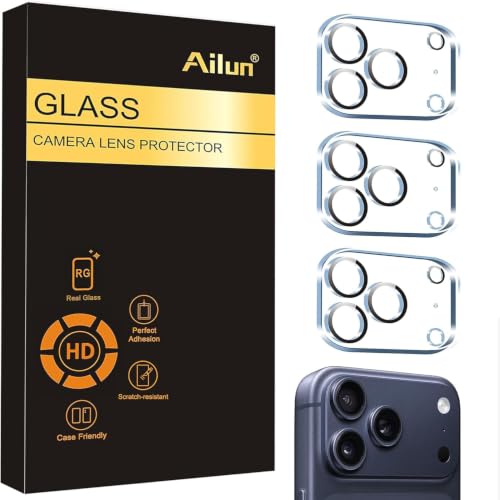
The camera module sits proud of the body and is the first thing to scrape when you set the phone down. A lens protector prevents that — and puts one more reflective surface between the scene and the sensor, which you will notice at night and almost never during the day.

Camera lensCanada
8 verified productswww.amazon.ca
The case for

Lens scratches appear in every photo you take afterwards

A scratch on your display is annoying. A scratch on the ultra-wide lens is in every single photo taken from that moment on — usually as a soft veil across bright areas, or a smear of flare around light sources.

It is also awkward to fix. On most modern phones the rear camera glass is bonded into the housing, so replacement is a workshop job rather than a part you swap, and it costs a meaningful fraction of the phone’s value.

Against that, a lens protector is one of the cheapest accessories on the shelf. Where the environment is genuinely abrasive, the arithmetic is easy.

The case against

Flare, ghosting and a washed-out flash

Every additional air-to-glass surface reflects a little light. In daylight this is invisible. Point the camera at a streetlight, a car headlight or a stage light and it becomes obvious: light bounces between the protector’s inner face and the lens, returning to the sensor as ghost images and haloes around bright points.

A cheap uncoated protector is markedly worse here than a properly anti-reflective coated one. If you photograph at night at all, that coating is the specification that matters, not the hardness claim.

There are two further failure modes worth knowing. If the protector covers the flash, its light reflects off the inner surface straight back into the lens and washes out the entire frame — a much more dramatic problem than flare. And any dust trapped between protector and lens stays there permanently, showing up in every shot; unlike a smudge on the front, you will not notice until you review the photos.

The alternative

Check your case first

Most cases now include a raised lip around the camera module that holds the glass clear of whatever surface the phone is resting on. That solves the single most common wear scenario — phone laid face-up on a table or desk — without putting anything in the optical path.

If your case already has that lip, and you are not routinely around sand, grinding dust or loose grit, you probably do not need a lens protector at all. The case is doing the job.

When to buy, when not to

The short version

Buy one if you work on sites or in workshops, spend time at beaches or in deserts, carry the phone loose in a bag with keys and coins, or hand it to children. In those settings the abrasion is real and constant.

Do not buy one if you shoot a lot at night or in low light and are unwilling to pay for a coated version, if your case already has a raised lip and your environment is ordinary, or if your phone has a sensor — LiDAR, laser autofocus — sharing the module that the protector would cover.

If you do buy, check the cutouts against your exact model before fitting. The layout differs between Pro and non-Pro variants of the same year, and a protector that covers a focus sensor causes problems that look like a broken camera.

Side by side

Lens protector vs raised-lip case

Lens protectorCase with raised lip
Protects againstDirect abrasion and gritContact with flat surfaces
Night photographyAdds flare unless coatedNo optical effect
Flash interferencePossible if it covers the flashNone
Trapped dustPossible, permanentNone
Best forSand, sites, workshopsOrdinary daily use
CostLowAlready owned, usually
Verified on Amazon.ca

What to look at

Prices change daily, so the price and availability that count are always the ones shown on Amazon once you follow the link. Every item below was checked individually against Amazon.ca before this page was published.

Affiliate disclosure: As an Amazon Associate, Screen-Protectors.com earns from qualifying purchases. It costs you nothing extra and does not influence the order or the content of our recommendations.
Other formats

Compare with the alternatives

FAQ

Frequently asked questions

Do camera lens protectors affect photo quality?

In daylight, rarely noticeably. At night or into bright light, an uncoated protector adds flare and ghost images around light sources. If you shoot after dark, buy one with an anti-reflective coating or skip it.

Lens protector or a case with a raised lip?

For ordinary wear — the phone resting on a table — the raised lip solves it with no optical cost. A protector earns its place around sand, grinding dust or loose grit in a bag.

Why do my flash photos look washed out?

Almost certainly the protector is covering the flash. Its light reflects off the inner glass surface straight back into the lens, flooding the frame. Check the cutouts match your exact model.

Can I remove one once fitted?

Yes — they are adhesive and lift off with patience and gentle warmth. Clean any residue off the lens with a dry microfibre cloth and check for trapped dust before deciding whether to fit another.